
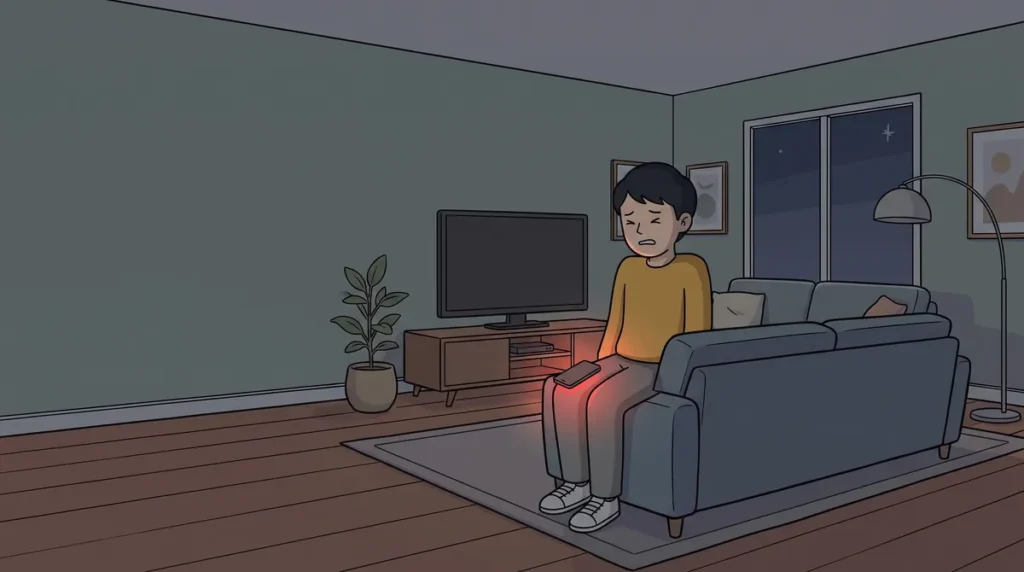
People avoid checking their bank account mostly when they expect the news to be bad. Records of real logins show that looking drops after bad days and near a zero balance, then returns when things improve1. Researchers call it the ostrich effect, and the data points to timing, not carelessness.
Is avoiding your bank balance just laziness?
The usual explanation is a character one: some people keep on top of their money and some cannot be bothered. The behavioural data does not fit that story well, because checking a balance takes almost no effort. There is no form to fill in and no decision to make. A tap shows a number, and the app closes again.
What the data shows instead is a pattern tied to what the number is likely to say. Nachum Sicherman, George Loewenstein, Duane Seppi and Stephen Utkus did not survey anyone about their habits. They studied the actual login records of about 1.1 million retirement savers at a large US investment firm, day by day, across two years1.
On the day after the stock market fell, logins dropped by 9.5%1. They also fell on days when a market volatility index was already signalling trouble, before any loss had been booked1. People were stepping back from news that had not yet arrived.
9.5%
Fewer investor logins on the day after a market drop1
Measured from real account logins across about 1.1 million people, not from what they said about themselves. It describes a drop in looking, not anyone’s losses.
The finding was not new to that paper. An earlier study by Niklas Karlsson, Loewenstein and Seppi had already seen the same asymmetry in investors in Sweden and the United States: more looking on up days, less on down days2. If the barrier were effort, it would be the same on every day. It is not. What these savers were avoiding was a number, not a chore.
Does the ostrich effect apply to everyday bank accounts?
Retirement savings rise and fall with the market, which is a long way from rent and groceries. So Arna Ólafsson and Michaela Pagel looked at ordinary money. Working with an Icelandic personal-finance app, they could see when people opened it and what was happening in their accounts at the time3.
The pattern held. Attention rose on payday and when cash was plentiful. It fell as balances shrank and as debt grew3. And when an account that had been overdrawn climbed back above zero, logins jumped3. People returned the moment the news turned good.
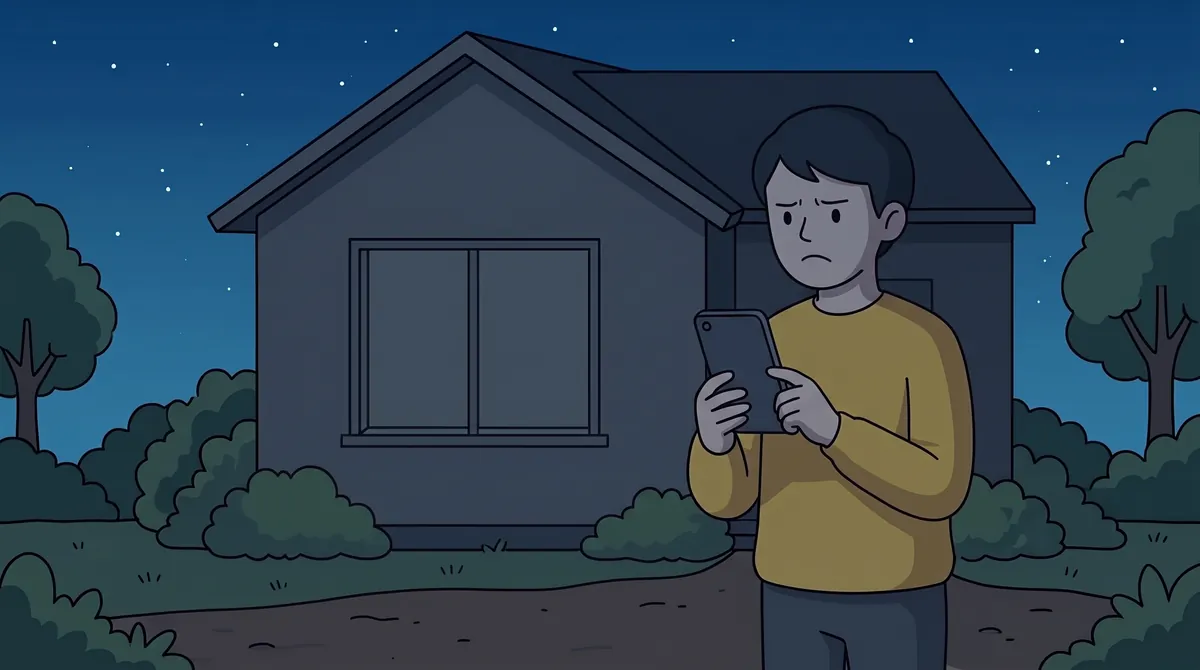
The striking thing is that these were not two kinds of people, careful and careless. The same person looked eagerly on payday and went quiet by the end of the month. Whatever decides whether someone checks, it moves with what they expect to find. This is a single working paper, and it has not yet been repeated in another country, so it is best read as strong support rather than proof.
The quiet stretch matters because of where it falls. In the United States, the Consumer Financial Protection Bureau found that people who overdraw more than ten times a year pay close to three quarters of all overdraft fees, around $380 each per year4. That shows where the costs gather: close to zero, which is exactly where looking gets hardest. It does not show that not checking causes the fees, and no study cited here tests that.
Why do people avoid information they already know?
The avoidance is not confined to money. The economist Emily Oster and two medical researchers studied people at genetic risk of Huntington’s disease, a serious inherited illness for which a definitive test exists. The test carries no medical risk. Even so, fewer than 10% of the people in a long-running research registry chose to take it5.
The untested people went on making large decisions, about children, careers and saving, much as if they had already heard good news5. The paper was later corrected in parts of its analysis; the core result, that very few people chose to know, stood5.
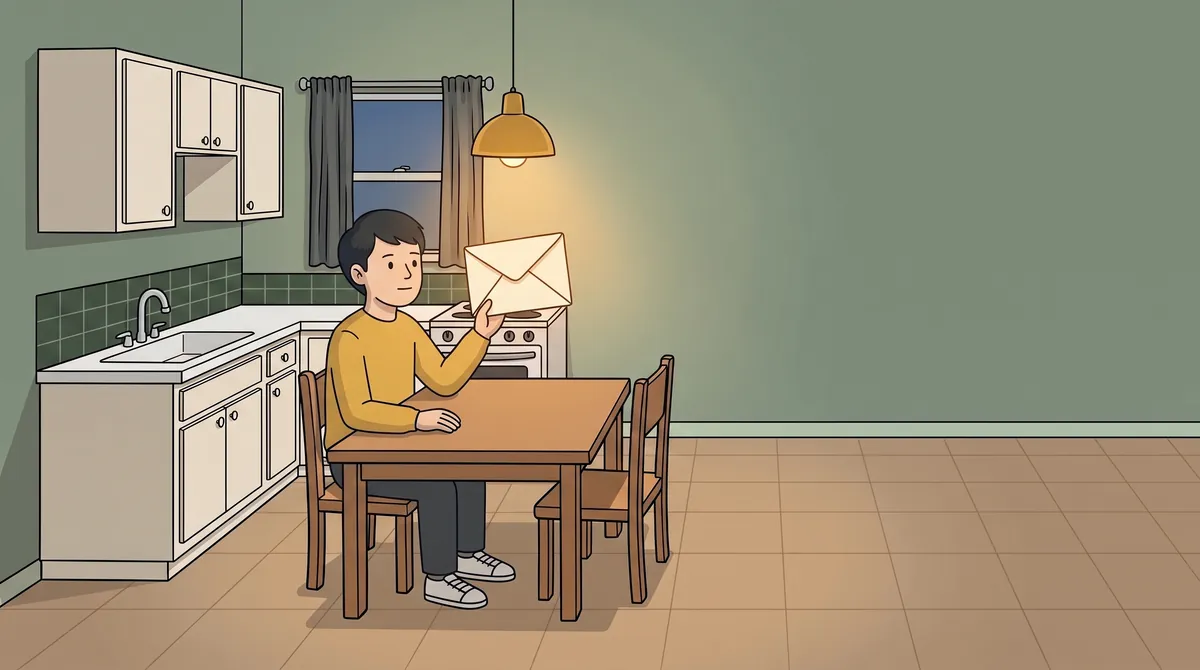
Nobody would describe those people as careless about their own lives. The researchers’ interpretation, shared by the authors of the login studies, is that not knowing preserves a better version of events5. While the result stays unseen, the good outcome remains possible, and a person can live in it a little longer. A sealed envelope works the same way.
That is an interpretation of behaviour, not a measurement of motive. A plainer explanation also fits some of the data: there is little point looking at a number that cannot be changed today. Either way, the unopened banking app and the untaken test share a shape. It is a common, very human way of keeping bad news at a distance.
Do ostriches really bury their heads in the sand?
No. The picture probably traces back about two thousand years to the Roman writer Pliny the Elder, and most likely comes from ostriches lowering their heads into the nest to turn their eggs6. From far away, a bird with its head down looks like it is hiding. It is actually tending to something.
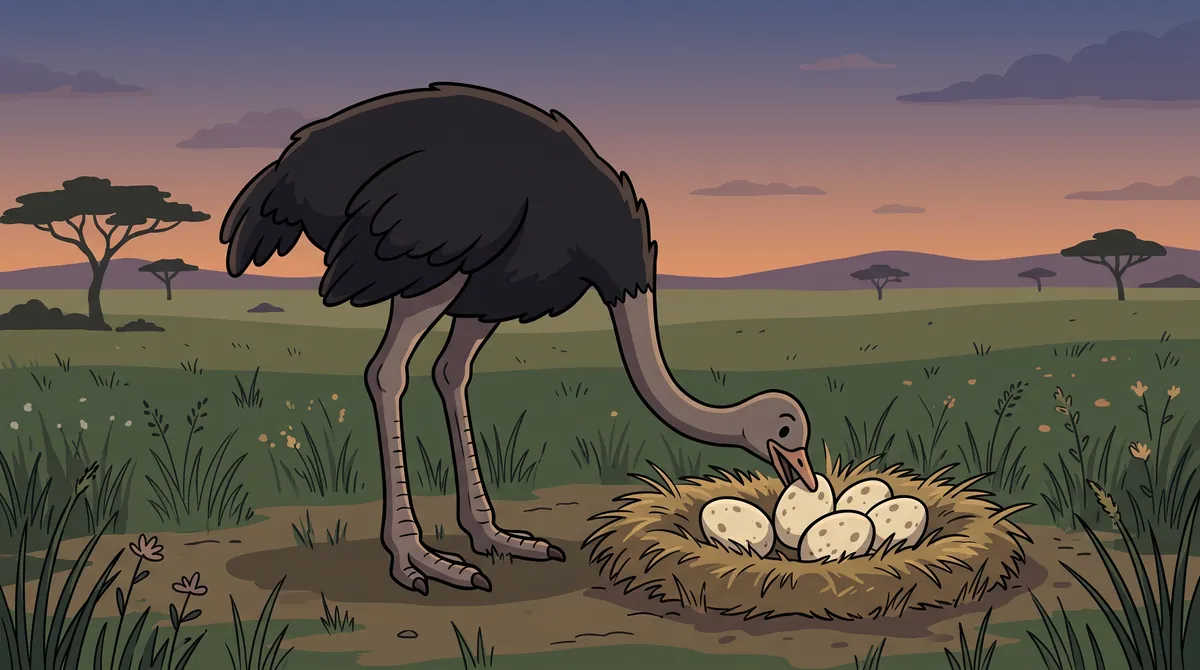
The animal was misread, and the popular account of the people named after it has a similar problem.
Do anxious people avoid checking their money more?
The common assumption is yes: the worriers, the people who care so much it hurts to look, must be the ones who avoid it. One of the best-known studies on the question points the other way.
Sarah Gherzi and her colleagues gave UK investors a standard personality questionnaire and matched the answers to their real login records7. Some investors did the reverse of the ostrich: after a bad day they checked more, not less. Those who checked most after bad news scored higher on neuroticism, the trait most tied to anxiety7. The authors named it the meerkat effect, after an animal that stands up to watch for danger rather than looking away.
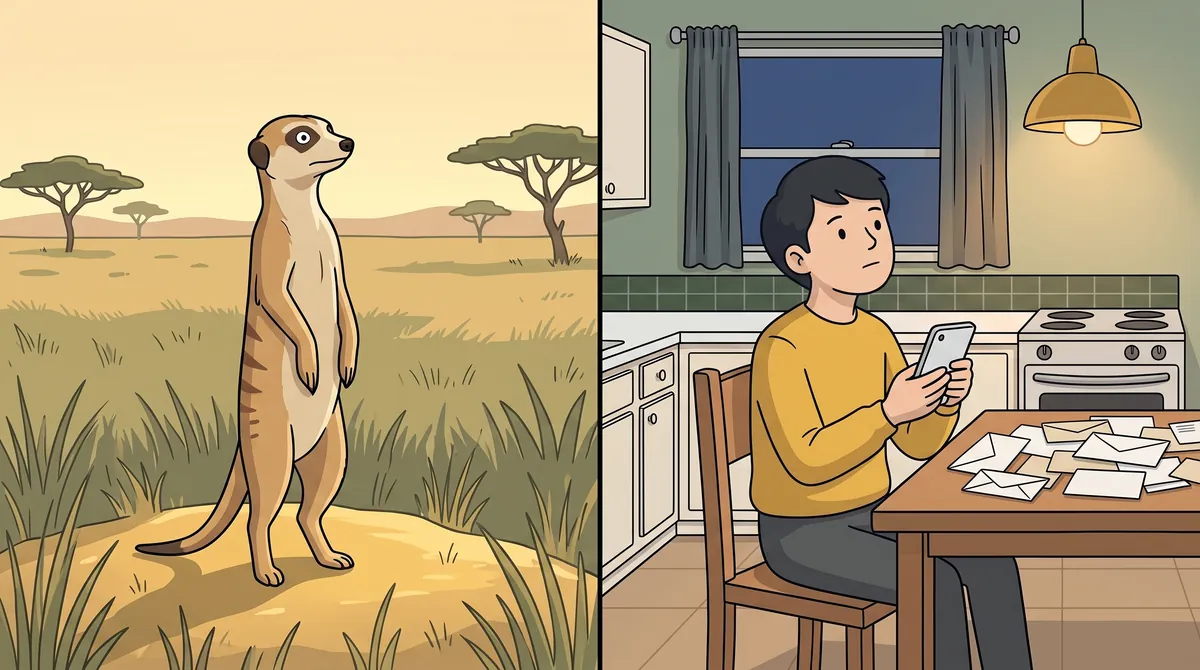
This is an open argument. Gherzi’s study covered 617 investors, while the Sicherman login study covered about 1.1 million, and its authors argue that a sample of that size cannot settle who avoids most7. The larger study reaches a different conclusion about which people look away1. Neither side has won.
What the research doesn’t show
It does not show who avoids most. The claim that anxious people are the natural avoiders is the part the best data contests, with a smaller study finding the opposite and a much larger one disagreeing7. Anyone who reads avoidance as a sign of a worried personality is leaning on the least settled part of this literature.
It does not prove the reason. “Protecting a good feeling” is how the researchers read the pattern1. None of these studies isolates the motive in an experiment, and simpler explanations, such as not looking at what cannot be acted on, fit some of the same records.
It does not show that avoidance causes harm. The overdraft figures describe who pays the fees, not why4. And the everyday-banking result rests on one Icelandic working paper that has not yet been repeated3.
What is not in dispute is the timing. Across a US brokerage and a banking app in Iceland, the same shape keeps appearing: people look when they expect good news and look away when they don’t1.
What an unopened banking app actually means
Picture a phone lying face-down on a sofa, with a notification that has been there since Tuesday. The usual reading is a verdict on the person: this is what being bad with money looks like.
The records suggest a different reading. The person who will not open the app on Friday is very likely the same person who opened it happily on payday. They are not someone who never checks. They are someone who checks on the good days, which is what most people in these datasets did. The unopened badge is one of the better-measured reflexes in behavioural finance, holding on to a hopeful guess for one more day. It is a question of timing, not of character.
Money pressure changes more than whether people look. It also changes how clearly they think, a separate effect covered in whether financial stress lowers your IQ.
Sources
- Sicherman, N., Loewenstein, G., Seppi, D. J., & Utkus, S. P. (2016). Financial Attention. The Review of Financial Studies, 29(4), 863-897. https://academic.oup.com/rfs/article-abstract/29/4/863/1896505
- Karlsson, N., Loewenstein, G., & Seppi, D. J. (2009). The Ostrich Effect: Selective Attention to Information About Investments. Journal of Risk and Uncertainty, 38(2), 95-115. https://link.springer.com/article/10.1007/s11166-009-9060-6
- Olafsson, A., & Pagel, M. (2018). The Ostrich in Us: Selective Attention to Financial Accounts, Income, Spending, and Liquidity. NBER Working Paper No. 23945. https://www.nber.org/papers/w23945
- Consumer Financial Protection Bureau, “Overdraft fees can price people out of banking,” CFPB Blog, March 30, 2022. https://www.consumerfinance.gov/archive/blog/overdraft-fees-can-price-people-out-of-banking/
- Oster, E., Shoulson, I., & Dorsey, E. R. (2013). Optimal Expectations and Limited Medical Testing: Evidence from Huntington Disease. American Economic Review, 103(2), 804-830. (Corrigendum published 2016, AER 106(6), 1562-1565 — a data/code correction, not a retraction of the core finding.) https://www.aeaweb.org/articles?id=10.1257/aer.103.2.804
- Multiple wildlife/zoology summaries citing the Pliny the Elder origin, e.g. Discover Wildlife (BBC Wildlife Magazine), “Do ostriches really bury their heads in the sand?” https://www.discoverwildlife.com/animal-facts/birds/do-ostriches-really-bury-their-heads-in-the-sand ; McGill University Office for Science and Society, “Ostriches Do Not Really Stick Their Heads in the Sand.” https://www.mcgill.ca/oss/article/did-you-know/ostriches-do-not-really-stick-their-heads-sand
- Gherzi, S., Egan, D., Stewart, N., Haisley, E., & Ayton, P. (2014). The Meerkat Effect: Personality and Market Returns Affect Investors’ Portfolio Monitoring Behaviour. Journal of Economic Behavior & Organization, 107(Part B), 512-526. https://www.sciencedirect.com/science/article/pii/S0167268114002145
Written by Wallet Wired from the same research as the video. Drafted with AI assistance; every figure is checked against the sources listed above.
Educational content, not financial advice.